
Sewage Treatment Plant Services
We assess, install, inspect and repair sewage treatment plants, helping you understand your system, meet the relevant discharge requirements and keep it operating as intended.





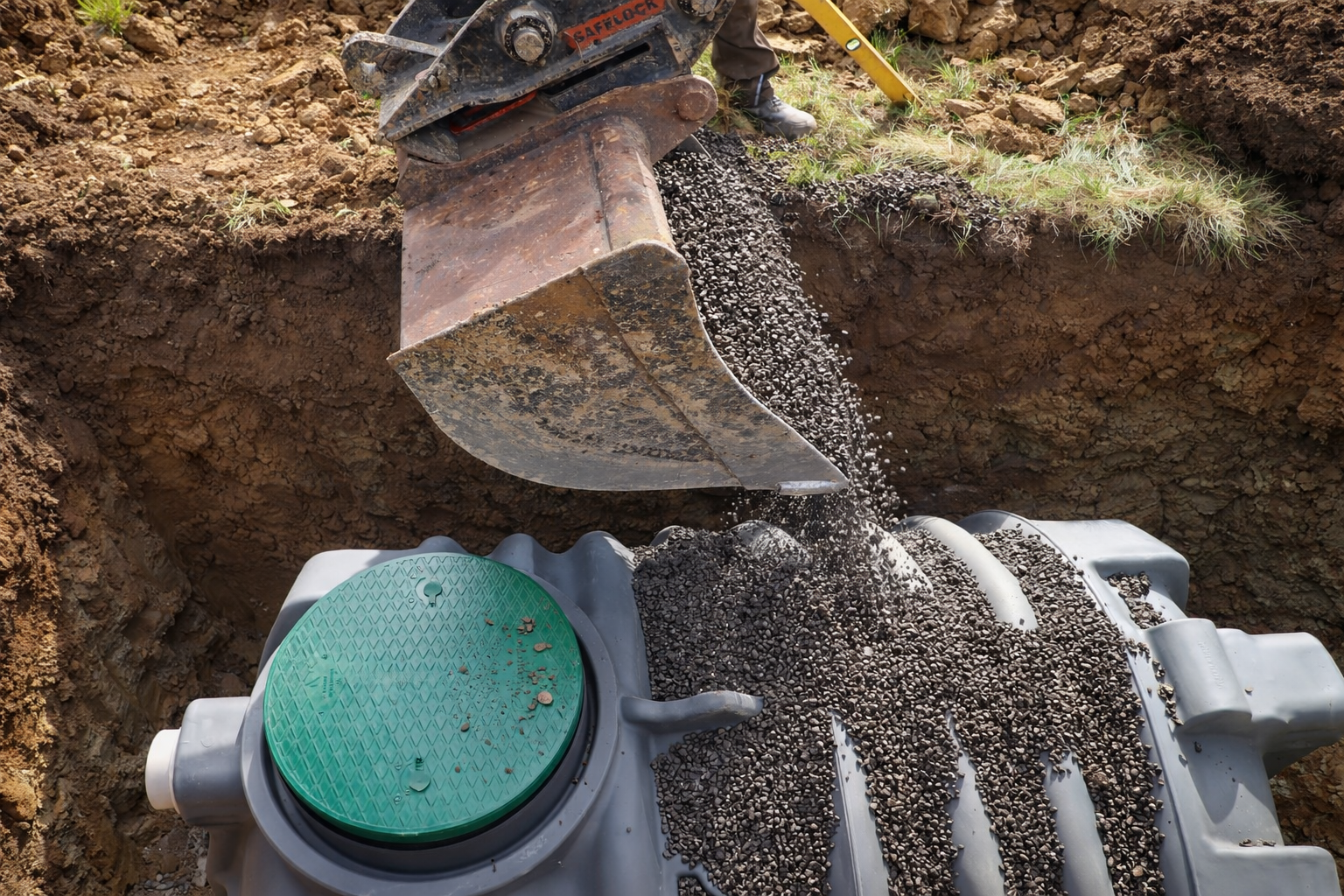
Sewage Treatment Plant Explained
A sewage treatment plant receives wastewater from a property, separates the solids and uses biological treatment to break down the remaining waste. The treated effluent then leaves through an approved discharge arrangement to the ground or surface water, provided the relevant rules are met.
Unlike a septic tank, a treatment plant typically needs a permanent electrical supply. It may contain components such as a blower, pump or diffuser, which require ongoing servicing. Accumulated sludge must also be removed periodically.
We assess the complete system, including the tank, inlet and outlet pipework, discharge arrangement and relevant operating components, to establish whether it needs maintenance, repair, compliance work or replacement.
UKDP's Expert Sewage Treatment Plant Services
From new installations to ongoing inspections, repairs and emptying, choose the support your treatment plant and connected drainage system require.
Installation
Site-specific new and replacement treatment plants, planned around usage, access, ground conditions, the discharge route, electrical supply and applicable approvals.
Learn moreRepairs
We diagnose the fault before repairing components such as pumps, blowers or diffusers where possible, or sourcing a suitable replacement where required.
Learn moreInspection
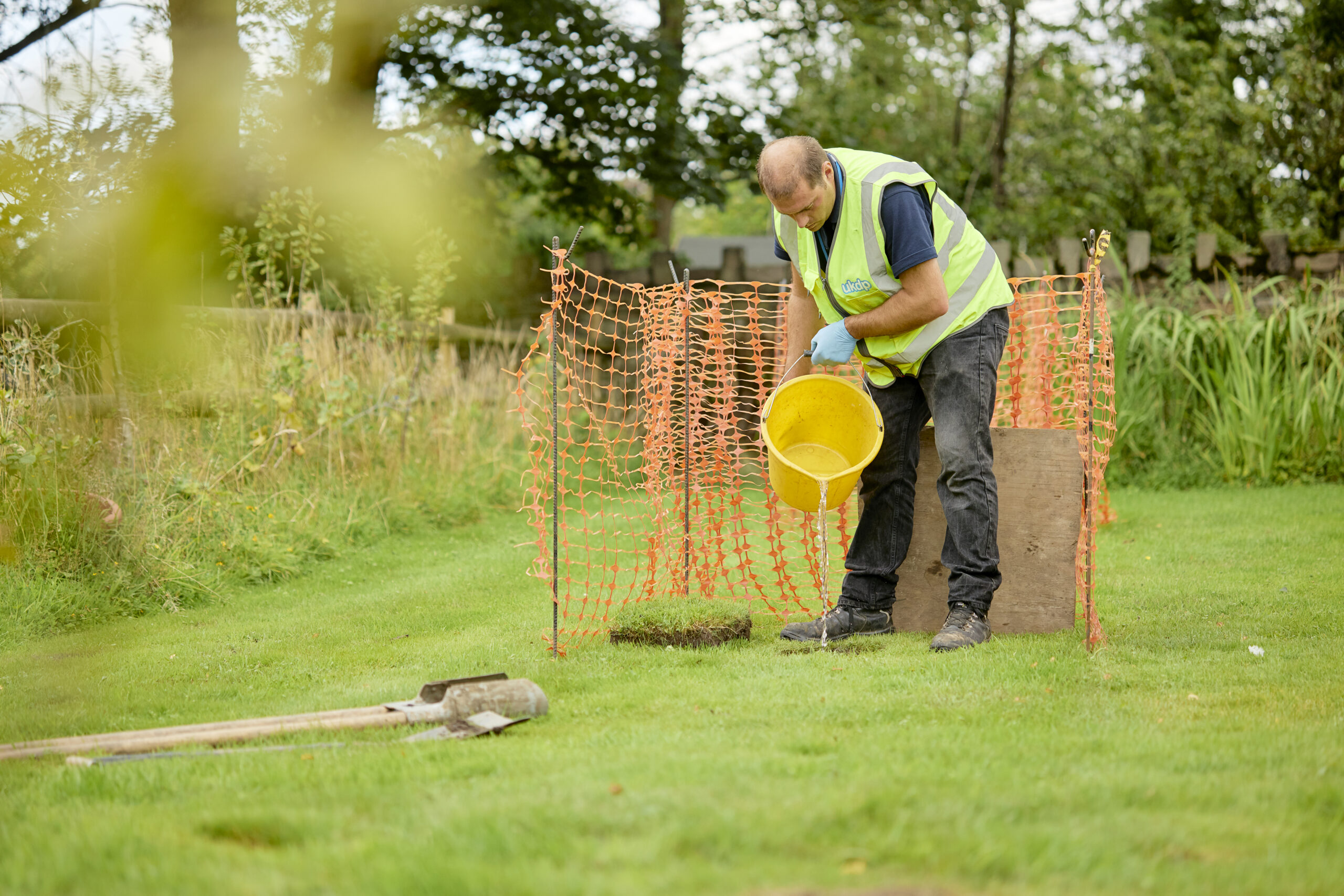
We assess the tank, connected pipework, inlet, outlet, discharge arrangement and visible operating components, followed by factual findings and recommended next steps.
Learn moreEmptying
We help arrange scheduled emptying to control accumulated sludge. The appropriate frequency depends on the plant, its usage and the manufacturer’s maintenance guidance.
Learn moreWhat UKDP's Sewage Treatment Plant Service Includes
The work required depends on the system, site and reason for your enquiry. Our support can include:
Site-specific assessment
We assess the property, existing drainage, access, ground conditions and discharge arrangement before recommending what should happen next.
Whole-system inspections
Our inspections cover the tank, inlet and outlet, connected pipework, discharge arrangement and accessible components, followed by factual findings.
System sizing and design
For new and replacement systems, we establish the required capacity and plan a suitable treatment plant around the property and site.
Component-led repairs
We diagnose faults affecting pumps, blowers, diffusers and other components, repairing them where possible or sourcing suitable replacements.
Installation and commissioning
We install the treatment plant, connect the drainage and electrical supply, commission the system and complete the agreed reinstatement work.
Compliance and documentation
We identify relevant General Binding Rules, permits and approvals, then provide the applicable reports, recommendations and completion documents.
What UKDP Customers Say
UKDP have, from my first contact with them, been very helpful, informative and re-assuring even when all hope seemed lost for a favourable outcome. Their in-depth knowledge and sheer determination made our claim possible where I feel sure most companies would have given up!
Thank you all so very much for all your work on my behalf. There is no way it was going to get done without your input. I would recommend you to anyone with similar problems. It's such a relief to have it done. Thanks again.
I cannot fault the tremendous work carried out by UKDP. From start to finish, all involved exhibited a professional, dedicated and high standard of work ethic. They treated my property with the utmost respect.
How UKDP's Sewage Treatment Plant Service Works
The assessment establishes the condition and compliance of the existing drainage system. It also determines whether the property can continue using a septic tank or needs upgrading to a sewage treatment plant.
Discuss your system
Tell us whether you have a fault, need an inspection or are considering a new or replacement treatment plant.
Confirm the assessment
We establish what needs checking and whether the plant must be emptied to complete the required inspection.
Inspect the system
We assess the treatment plant, connected pipework, discharge arrangement, site conditions and relevant components.
Confirm the right system
The findings determine whether the existing system can remain, whether repair or maintenance is appropriate, or whether an upgrade to a treatment plant is required.
Agree the work
We explain the proposed scope, price, access requirements, approvals and schedule before you decide whether to proceed.
Complete and sign off
We complete the agreed work, commission new equipment where applicable and provide the relevant documents and aftercare guidance.
Who UKDP Helps
We support those responsible for sewage treatment plants, from ongoing system management and property transactions to technical investigations and insurance claims.
Homeowners
Inspection, servicing, repair and replacement for the treatment plant serving your home.
Learn moreLandowners
Inspection, emptying, repair and replacement support for treatment plants serving individual properties, rural estates and larger property portfolios.
Learn moreInsurers
Independent investigations, factual reports and technical recommendations for claims involving damaged treatment plants, operating components and connected drainage.
Learn moreEstate Agents
Clear surveys covering the plant’s condition, operation, maintenance history and discharge arrangement, helping buyers and sellers understand the system before a transaction progresses.
Learn moreSigns Your Sewage Treatment Plant Needs Expert Help
A warning sign does not always mean the plant needs replacing. The right investigation identifies which part of the system requires attention.
Signs Something Is Wrong
- The alarm or warning light has activated
- Persistent unpleasant smells near the plant
- New noises, or the usual operating sound has stopped
- Toilets or drains are emptying slowly
- Wastewater or boggy ground appears near the system
- The plant fills quickly or needs unusually frequent emptying
What We Investigate
- The power supply, controls, pump, blower and relevant electrical components
- Aeration, sludge levels, blockages and the inlet or outlet arrangement
- Pumps, blowers, diffusers and other moving components
- The inlet, upstream pipework, blockages and the plant’s operating level
- The tank, pipework, outlet and discharge arrangement
- Sludge accumulation, groundwater or rainwater ingress, system condition and sizing
UKDP's Recent Sewage Treatment Plant Work
Why Choose UKDP for Your Sewage Treatment Plant
Established in 2009, we combine treatment plant expertise with practical advice, regulatory knowledge and nationwide project support.
Treatment plant expertise since 2009
We understand how the tank, pipework, discharge route and components such as pumps, blowers and diffusers work together.
WTE and GRAF experience
Compliance-led advice
We establish how and where the system discharges, then explain the General Binding Rules, permits and approvals that may apply.
Evidence-led recommendations
We explain what the findings show before recommending maintenance, repair or replacement, with clear reasons for the proposed next step.
Substantial business cover
UKDP holds £15 million in Public Liability, £15 million in Employers’ Liability and £2 million in Professional Indemnity insurance.
Nationwide, locally delivered
Our engineers and trusted local partners provide sewage treatment plant support across the UK, coordinated by the UKDP team.
Sewage Treatment Plant Compliance and Maintenance
Your responsibilities depend on the plant, discharge route, location and when the discharge began. In general, the system must:
- Be correctly sized for the maximum amount of sewage it treats.
- Meet the relevant British Standard for its installation date.
- Be operated and maintained in line with the manufacturer’s instructions.
- Meet the General Binding Rules for discharges to ground or surface water.
- Have Building Regulations approval and, where necessary, planning permission.
- Have an Environment Agency permit if the General Binding Rules cannot be met.
- Be repaired or replaced if it is no longer in good working order.
- Be emptied before sludge exceeds its capacity, as instructed by the manufacturer or as needed.
We identify your plant and discharge arrangement, assess its condition and capacity, and explain the requirements that apply. We then coordinate any agreed maintenance, repairs, permits or compliance work.
Sewage Treatment Plant Costs
There is no single price for a sewage treatment plant because the scope depends on the property, existing drainage system and work required.
UKDP first assesses whether the current system can remain in place or needs upgrading. Where a treatment plant is required, the quote reflects the suitable system, access, groundwork, connecting drainage, discharge arrangement and commissioning.
You receive a clear scope and price before deciding whether to proceed. This ensures the quote is based on the work the property actually needs rather than a broad estimate.
Sewage Treatment Plant Guides and Case Studies
A Successful Sewage Treatment Plant Installation in Cheshire
See how UKDP replaced a failed shared septic tank serving five properties with a correctly sized sewage treatment plant.
Read article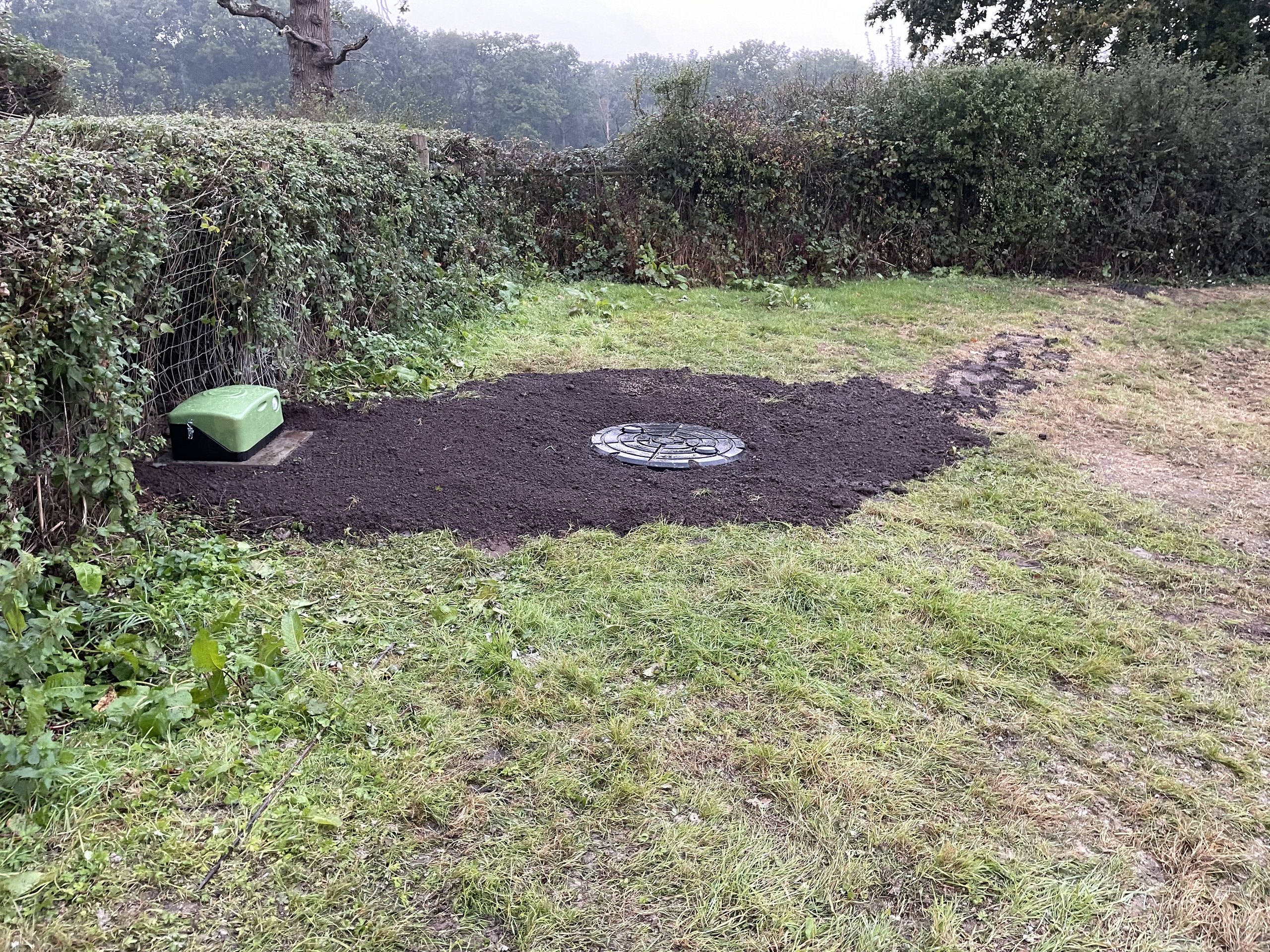
Septic Tanks vs Sewage Treatment Plants: What's the Difference?
Compare how the two systems work, how they discharge wastewater and which factors determine the appropriate option for a property.
Read articleSewage Treatment Plant Services: Frequently Asked Questions
Ask our teamWhat is the difference between a septic tank and a sewage treatment plant?
A septic tank separates solid waste from wastewater, which normally passes into a drainage field for further treatment. A sewage treatment plant uses biological treatment and mechanical components to treat wastewater to a higher standard. This can make a compliant discharge to surface water possible where site conditions and regulations allow.
Can a sewage treatment plant discharge into a stream or ditch?
It can discharge treated effluent to suitable surface water if the system and discharge meet the Environment Agency’s General Binding Rules. The plant must meet the relevant British Standard, be correctly sized and maintained, and must not cause pollution. Some locations or discharge arrangements require an environmental permit.
Do I need planning permission or an environmental permit?
A new sewage treatment system requires Building Regulations approval, and planning permission may also be needed. You will not normally need an environmental permit if the discharge meets every applicable General Binding Rule. The requirements depend on the discharge route, volume, location and when the discharge began. The UKDP team is here to help.
How often should a sewage treatment plant be serviced and emptied?
Service the plant in line with its manufacturer’s instructions, as intervals differ between systems. Sludge must be removed before it exceeds the plant’s capacity, normally at least once a year or as directed by the manufacturer. Regular servicing also helps identify worn mechanical or electrical components before performance deteriorates.
Can I keep my septic tank instead of installing a sewage treatment plant?
Possibly. UKDP assesses the tank, connected drainage and discharge arrangement before recommending a solution. The findings determine whether the septic tank can remain, needs remedial work or must be replaced with a sewage treatment plant. We explain the evidence and only recommend an upgrade where the existing arrangement is unsuitable, failing or non-compliant.
Can my sewage treatment plant be repaired, or will it need replacing?
That depends on the fault and the condition of the wider system. Pumps, blowers, diffusers, controls and some damaged components can often be repaired or replaced. A new plant may be more appropriate where there is serious structural damage, insufficient capacity or a system that cannot meet current discharge requirements.
How long does a sewage treatment plant installation take?
A typical installation takes around five to seven working days once the design and required approvals are in place. The exact programme depends on access, excavation depth, groundwater, ground conditions and the proposed discharge arrangement. We assess these factors before confirming the installation plan and timescale.
What does a UKDP sewage treatment plant inspection include?
We inspect the plant and accessible upstream and downstream pipework, assess the outlet and discharge arrangement, and use dye testing to identify rainwater cross-connections. Once the plant is empty, we complete a 360-degree structural assessment.
Does a sewage treatment plant need electricity?
Most sewage treatment plants use electricity to power mechanical components that help treat wastewater. The power requirement and equipment vary between systems, so UKDP selects a plant suited to the property and explains its operating requirements. A reliable power supply is important because prolonged interruption can prevent the plant from treating wastewater as designed.
Can sewage treatment plant work be covered by insurance?
Insurance may cover sudden, insured damage to a treatment plant or its connected drainage, but not deterioration, poor maintenance or every required upgrade. UKDP can investigate the damage, provide evidence and assess the policy position. Where a valid claim is accepted, you pay only your policy excess. Our claims support is free.
Talk to UKDP About Your Sewage Treatment Plant
Tell us what is happening with your system, and we’ll explain the right next step, whether inspection, repair or replacement.