
Septic tank emptying: why, when and how?
Why a septic tank needs emptying, how often, what it costs, and what's involved.
Key takeaways
- You should get a septic tank emptied about once a year, because the scum and sludge it holds back build up inside it.
- The tank separates waste into scum, separated waste water and sludge, and only the water should flow out to the soakaway.
- Skipping empties can cause slow flushing, gurgling pipes, waste backing up to the house and solids blocking the soakaway.
- Larger, underused tanks can go longer between empties, while undersized or overused tanks need emptying more often.
- A tanker operator uses a long hose and suction to remove the waste, then takes it away for disposal.
- Emptying usually costs £180 to £280 per 1,000 gallons, depending on the volume.
- Use a licensed waste carrier, and treat an overflow between routine empties as a possible sign of damage to the tank or soakaway.
So, most of us know what’s involved in filling up a septic tank. Although of course it’s not just yesterday’s lunch that finds its way into your septic tank, there are other types of waste that end up there too. Water from your showers and sinks, as well as the waste water from your dishwasher and washing machine typically also flow into your septic tank, creating quite a cocktail!
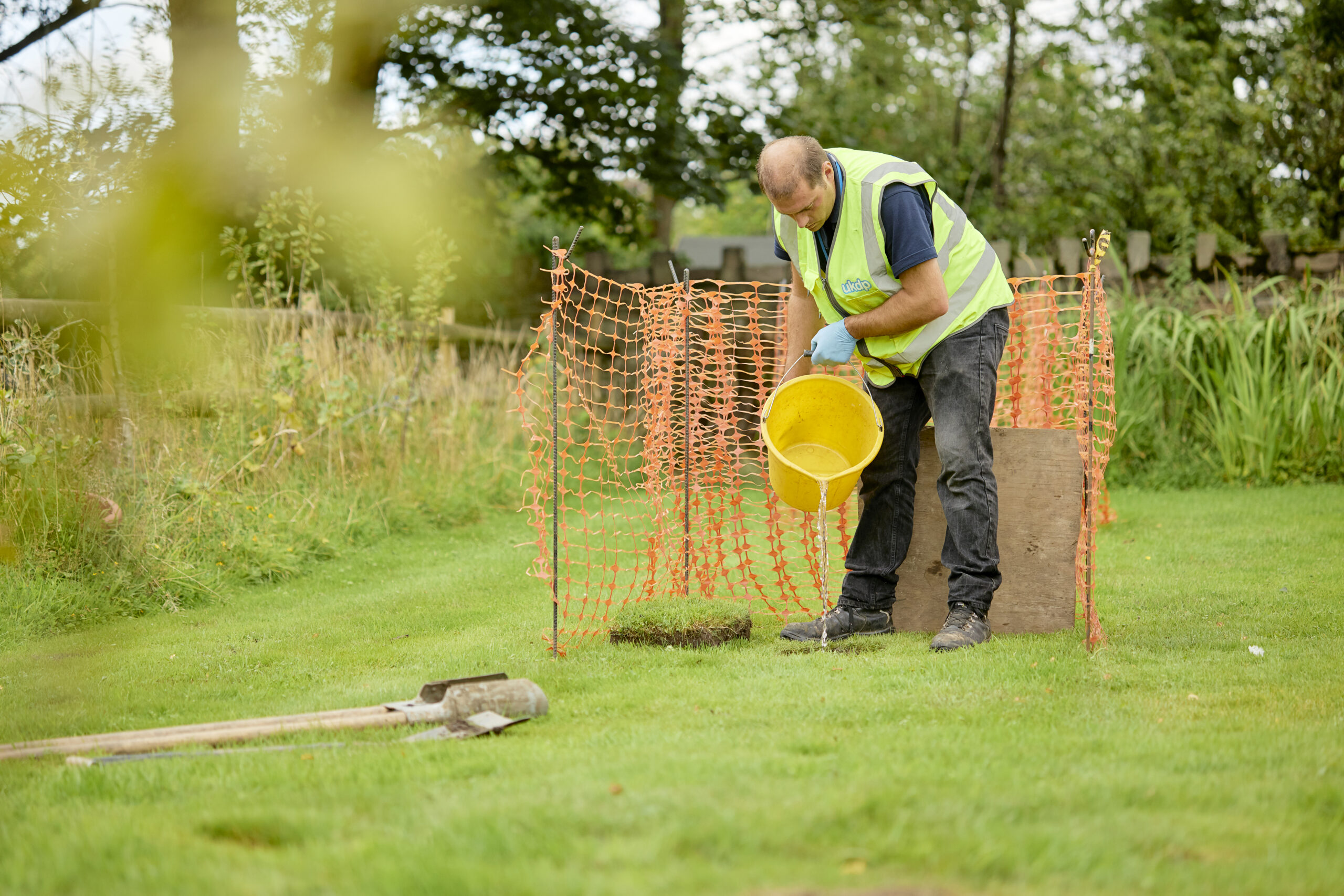
Everything that drains from your sinks, showers and appliances ends up in the tank, where solids settle and only the liquid should pass out to the soakaway. Emptying clears the sludge that builds up, which is why most tanks need a visit about once a year.
Septic tank emptying: why is it needed?
All septic tanks have an outlet, a pipe that runs from the tank and which typically flows to a drainage field or soakaway system. This is a network of perforated or slotted pipes which allow the waste water from your septic tank to percolate safely into the ground without causing pollution. Your septic tank itself doesn’t treat the waste, instead it separates out the waste into three different layers: the attractively named ‘scum’, the slightly more tolerable ‘separated waste water’ and at the bottom, the delightfully labelled ‘sludge’. It is only the separated waste water which leaves your septic tank and heads for the soakaway system, the other more solid stuff stays in the tank. It’s all this which needs to be emptied out regularly.
What happens if you don’t empty your septic tank regularly?
Bad things. Unless of course you’ve long since fancied a unique (and pungent) new water feature in your garden. Not emptying your septic tank regularly can result in a few different problems: toilets taking longer to flush, gurgling sounds in your pipes, even waste backing up to your house. It can also mean that the wrong kind of waste escapes from your septic tank out into the soakaway system, blocking it up and forcing the waste to pool above ground. Not only is this bad news for you, it’s also bad news for the environment as the waste can pollute local watercourses.
When should you get your septic tank emptied?
There are no hard and fast rules about this, but a general rule of thumb is that you should be getting your septic tank emptied approximately once a year. This can vary depending on how many people live in your house, and therefore how much waste fills the tank. It also depends on whether your septic tank is appropriately sized for your property, for example, if a property has been extended over time, it may be that the septic tank has not been upgraded to cope with the extra waste. Therefore, a larger tank which is underused could cope with a longer gap between empties, whereas as an undersized or overused tank may need to be emptied more regularly.
Generally speaking, if you work to once a year, that is a good place to start.
What’s involved in septic tank emptying?
A local septic tank emptying company will send out one of their tankers with a long flexible hose. The tanker operator will insert this into your septic tank and a powerful suction force is then used to empty all the waste out. Luckily for you, this will be the last you’ll see (or smell) of it, and they will take it away and dispose of it properly.
On that note, you must ensure that whoever empties your septic tank carries the appropriate waste disposal licence. You can use the link below to the Environment Agency to check who carries the correct licence:
How much does septic tank emptying cost?
Emptying usually costs £180 to £280 per 1,000 gallons, depending on how much is removed. There are regional variations in pricing, and of course it’s a competitive market so some areas may have multiple companies offering lower prices. Find a few local companies to get prices, and pick one that you like the look of.
How can you tell if you are having septic tank problems or soakaway problems?
There are two main reasons for having your septic tank emptied. The first is a routine empty like we’ve talked about above. The second is because your tank has backed up or is overflowing unexpectedly.
If your tank is not due a routine empty, and you haven’t just had an enormous party at your house, an overflowing tank could be a sign of trouble brewing underground. Damage to your septic tank or soakaway system can cause your septic tank to fill up more quickly than usual. But don’t worry, we can help.
Here at UKDP we are specialists at getting to the bottom (excuse the pun) of septic tank problems, and getting them fixed as quickly as possible. We might even be able to get the costs of any repair or replacement needed covered by your buildings insurance.
If it’s not a routine septic tank empty you need, just call our team for advice on 0800 028 9903 or send us a message and we’ll get right back to you.
We can give you some advice as to what might be going on, and help you to get things sorted as soon as possible.
Frequently Asked Questions
Can I empty my own septic tank?
No, not in practice. The waste has to be taken away and disposed of by a licensed carrier, and a domestic tank needs a vacuum tanker to empty it properly. Book a professional emptying service rather than attempting it yourself.
How long does septic tank emptying take?
Not long. Emptying is a single tanker visit, not a half-day job. The engineer connects a suction hose, empties the tank and takes the waste away for licensed disposal.
Do sewage treatment plants and cesspits need emptying too?
Yes, and on different schedules. A septic tank or treatment plant is usually emptied about once a year, and a treatment plant is serviced around the same time because it has moving parts. A cesspit only holds waste and treats nothing, so it needs emptying far more often.
What should I do if my septic tank is backing up or overflowing?
Stop running water into it where you can, then get it emptied quickly; we can usually arrange this through our tanker partners. If it backs up again soon after, the tank or soakaway is likely damaged rather than just full, so book an inspection to find the cause. A survey is £399 including VAT.
Is emptying my septic tank a legal requirement?
There's no fixed legal schedule, but you are responsible for keeping the system working and not causing pollution. Regular emptying, usually once a year, is how most owners stay on the right side of that. Skip it and you risk blockages and a failed soakaway.
About the author
Sam Warren
UKDP co-founder
Sam Warren co-founded UKDP with James Warren in 2009 as an off-mains drainage specialist.
Need help with your septic tank or drainage?
Reach out to us on 0800 028 9903. Our team are here to talk Monday to Friday 9am to 5pm.
Related articles
How Do You Know When a Septic Tank Is Full?
Learn the signs that a septic tank is full and needs emptying, and what can happen if it is left too long.
Read article
Septic Tank Backing Up Into House
Find out why a septic tank backs up into the house, the warning signs to look for and what to do about it.
Read article
We Haven't Emptied Our Septic Tank in 20 Years and Never Had a Problem: Can This Be True?
Find out why a septic tank that seems trouble-free can still be causing damage, and what to check if it has not been emptied.
Read article